

Through service, research and community-centred public health innovation, Dr. Pranjal Upadhyay has built a life dedicated to reaching the unreached.
Some careers are built by following opportunity.
Others are built by choosing responsibility.
Dr. Pranjal Upadhyay’s journey belongs to the second kind.
A public health physician and District Immunization Officer in Betul, Madhya Pradesh, Dr. Upadhyay has spent years working among tribal and underserved communities where healthcare is shaped by distance, culture, poverty, terrain and trust.
In an age when many medical professionals pursue metropolitan hospitals and urban careers, he chose to work in remote tribal regions. He chose communities where access to healthcare was not guaranteed. He chose service over comfort.
His work in Bhimpur and other underserved areas of Madhya Pradesh reflects a rare blend of compassion, research, leadership and public health innovation.
It is the story of a doctor who understood that healthcare is not only about treating illness. It is about building trust, restoring dignity and ensuring that no community is forgotten.
A Life Built Around Listening
Dr. Upadhyay’s work began with a simple but powerful realization: effective healthcare in tribal regions cannot be imposed from outside.
To serve a community, one must first understand it.
His posting in Bhimpur became a turning point in his life. The region, surrounded by dense forests and difficult terrain, exposed him to health inequities that are often invisible from urban policy discussions.
He saw that tribal communities faced barriers beyond infrastructure. Families struggled with transport limitations, cultural hesitation, language gaps, economic difficulty and mistrust of institutions.
Instead of seeing these as obstacles alone, he treated them as realities that healthcare systems must learn to respect.
He spent time with tribal elders, mothers, traditional healers, frontline workers and community leaders. He listened to stories, observed customs and tried to understand beliefs around childbirth, immunization, childhood illness and nutrition.
This act of listening became the foundation of his work.

Walking the Difficult Roads
The phrase “reaching the unreached” is often used in public health. In Dr. Upadhyay’s case, it became lived reality.
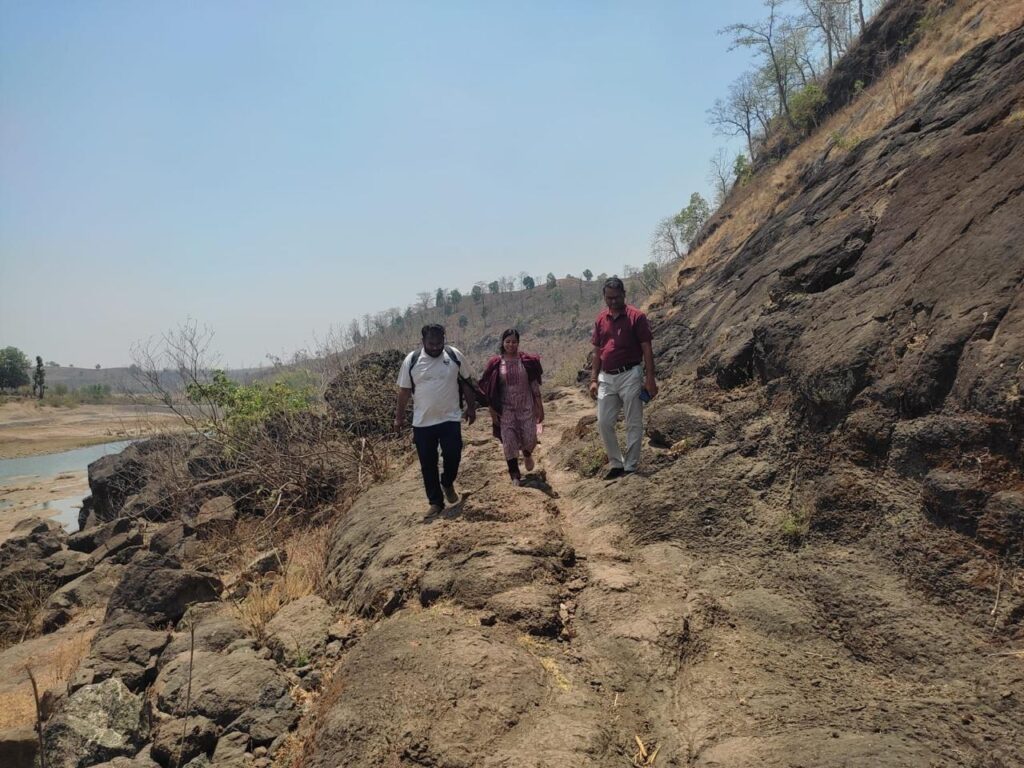
His work took him to remote villages where roads were difficult, access was limited and healthcare delivery required persistence. Field visits were not symbolic exercises. They were essential to understanding why people were unable or unwilling to access services.
This immersion shaped his philosophy.
He realised that statistics can measure outcomes, but they cannot fully explain behaviour. Numbers may show low immunization or high malnutrition, but only field engagement can reveal why those problems continue.
That insight led him toward research.
Research That Became Action
Dr. Upadhyay’s public health journey is marked by his ability to turn research into practical intervention.
He studied health-seeking behaviour, home deliveries, vaccine hesitancy, maternal and child health risks, malnutrition and healthcare access. But he did not treat research as an academic endpoint.
For him, research was a way to design better solutions.
His approach combined scientific evidence with cultural sensitivity. This made his interventions more acceptable to communities and more effective in practice.
His work reflects an important lesson for healthcare systems: policy succeeds when it is rooted in the lives of the people it intends to serve.
Innovation in Tribal Healthcare
Among Dr. Upadhyay’s important contributions is the development of tribal-friendly healthcare systems.
At CHC Bhimpur, he worked to make healthcare facilities more welcoming and culturally responsive. The goal was to create a space where tribal families felt respected, comfortable and understood.
This was not a cosmetic change.
It addressed one of the deepest barriers in public health: fear and mistrust.
The initiative focused on improving communication, patient experience, maternal and child care services, sanitation, accommodation for accompanying family members and stronger community connection.
The result was a healthcare environment where communities could begin to feel ownership.
Reaching the Unreached
Dr. Upadhyay has also led and contributed to several public health initiatives in immunization, nutrition and maternal-child health.
Arogya Ki Oor, meaning “towards health” and also described as “Reaching the Unreached,” focused on strengthening immunization coverage in geographically inaccessible tribal villages. The initiative brought together outreach, community participation and improved service delivery.
His work in Anaemia Mukt Bhimpur helped identify and manage childhood anaemia. Through Poshan Clinic, he strengthened systems for severe and moderate malnutrition. Through Mantra Chaya, he promoted Kangaroo Mother Care and parental engagement for newborns and low-birth-weight infants.
These programs reflect his belief that public health must be practical, compassionate and locally designed.
The Leader Behind the Work
Dr. Upadhyay’s leadership is guided by integrity, compassion, accountability, innovation and evidence-based decision-making.
He believes great leaders focus on purpose rather than position. They empower others, remain adaptable and inspire people to achieve more than they imagined possible.
This philosophy matters in public health because no doctor, officer or administrator can create change alone. Sustainable transformation requires communities, frontline workers, government systems and local stakeholders to move together.
Dr. Upadhyay builds trust through transparency, consistency and active listening.
That trust is one of the most powerful tools in his work.
Scholar, Author and Servant Leader
Beyond field service and administration, Dr. Upadhyay has contributed to research and public health writing.
His work spans tribal health systems, immunization, nutrition, maternal and child health, healthcare access and community participation. He has also authored works connected to immunization, tribal health behaviour and health leadership.
This makes his journey deeply layered.
He is a physician, administrator, researcher, author and community-focused public health leader.
But at the centre of all these roles is one constant: service.
The Legacy of Compassionate Healthcare
Dr. Pranjal Upadhyay’s story is not only about professional achievement.
It is about choosing the harder path because the harder path mattered more.
His legacy ambition is clear: to contribute to a healthcare system where no individual is deprived of quality care because of geography, poverty or social barriers.
In a world searching for better ways to reach marginalized populations, his work offers an enduring lesson.
Lasting healthcare change begins when professionals become part of the communities they serve.
Dr. Upadhyay’s journey reminds us that public health is not only built in hospitals, offices or reports.
Sometimes, it is built by sitting on the floor of a tribal home, listening before speaking, walking difficult roads and believing that every community deserves healthcare with dignity.
That is the kind of leadership that does not merely treat lives.
It transforms them.


